.svg)

An Investigation into What 501(c)(3)s Lose When They Underinvest in Storytelling
By someone who's seen both sides from inside the machine and outside trying to fix it.
I've spent years working inside 501(c)(3) organizations and tech-for-good companies. I've sat through budget meetings where marketing was the first line item cut. I've watched brilliant mission-driven work die in obscurity because no one knew how to tell its story. And I've seen the red tape-God, the red tape-that turns urgent social issues into committee meetings that drag on for quarters.
Here's what I learned: The organizations changing the world aren't just doing good work. They're telling good stories. And the numbers prove it.
The Data Board Members Need to See
Let's start with cold, hard ROI—because that's what gets attention in budget meetings.
Email marketing returns $40-44 for every $1 spent. Not $2. Not $10. Forty dollars. And yet, nonprofits generally allocate only 5-15% of their budget to marketing, with marketing often being one of the first areas to see budget cuts in times of economic turbulence.
Think about that math. An organization with a $1 million budget allocating just 10% to marketing ($100,000) could theoretically generate $4 million in donations through email alone. Yet many nonprofits treat creative strategy as an expense rather than an investment.
The disconnect is even more striking when you look at storytelling specifically. People remember stories 22 times more than facts alone, and when content is formatted as videos, viewers retain 95% of the message compared to just 10% when reading it in plain text.
From: Campaign Monitor, “How Do You Calculate Email Marketing ROI,” and Vermilion, “How Nonprofit Marketing and Communications Budgets Really Work.”
Why Massive Organizations Can't Move Fast Enough
I've seen this firsthand: Large foundations and established nonprofits often have the resources but lack the agility. The approval chains are Byzantine. A social media post might need sign-off from legal, communications, the executive director, and a board member. By the time everyone weighs in, the moment has passed.
Organizations that use data to inform strategy experience 2.7x more campaign success than those that rely on instinct alone. But data without the ability to act on it quickly is just trivia.
This is where creative agencies and design teams become force multipliers. They can move at the speed of culture while maintaining the integrity of the mission.
The Trans Script Case Study: When Creative Strategy Meets Urgent Need
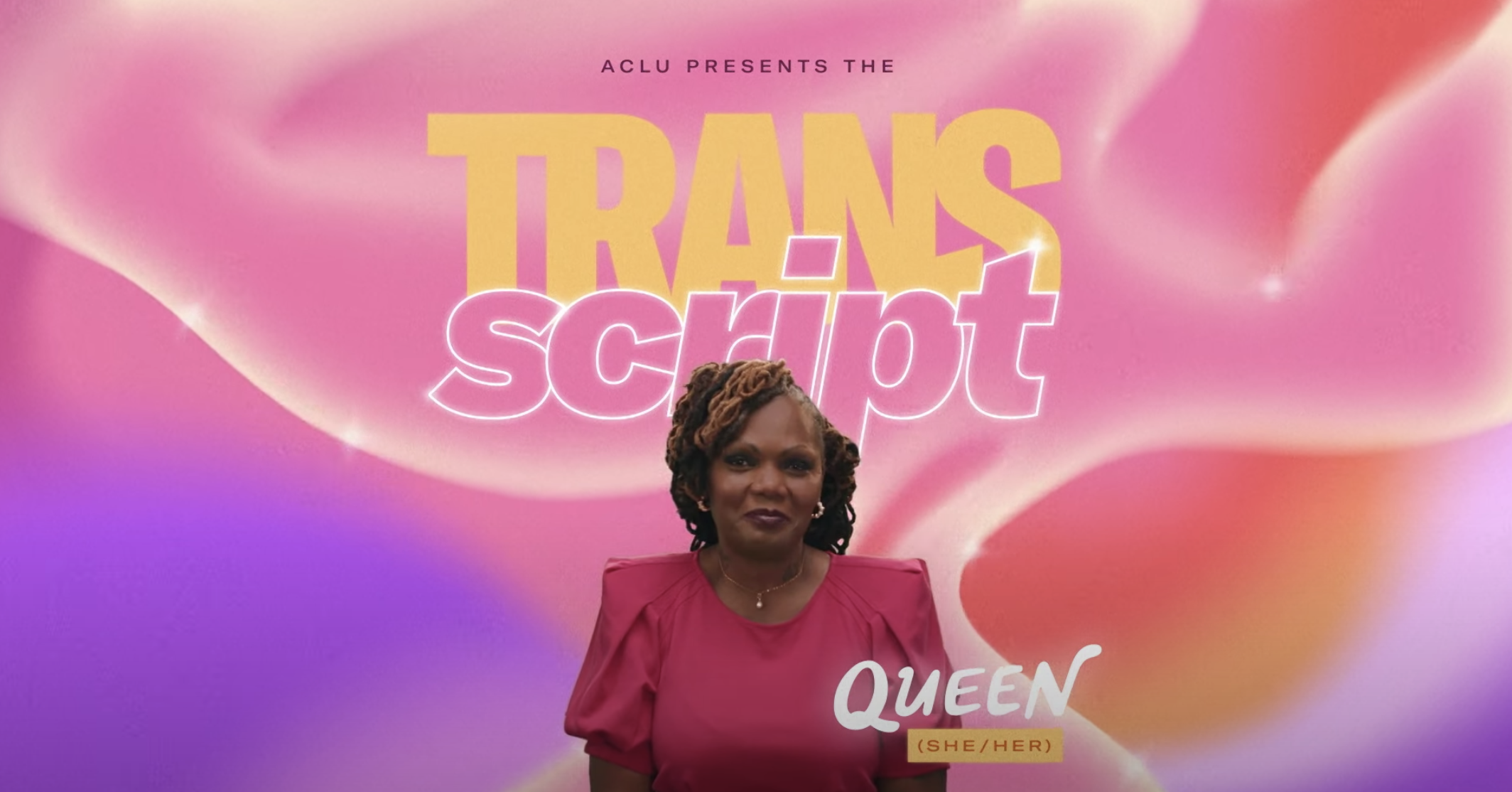
Consider the ACLU's "Trans Script" campaign.
The challenge was clear: transgender rights were under attack, and the narrative was being defined by fear rather than humanity. The typical nonprofit approach would be policy papers, white papers, legal briefs—all important, but not what moves hearts.
Instead, we took a different approach:
- Celebrated everyday moments of trans joy rather than focusing solely on transition
- Featured stories of love, parenting, and finding home
- Paired each story with vibrant, colorful animation that made the content shareable
- Created a "Trans Timeline" website celebrating 50 years of the trans and non-binary community
- Invited community participation through story submission
The campaign was designed to do something traditional advocacy couldn't: make people feel something before asking them to think something.
The result? A strong positive social media response. According to Rebecca Lowell Edwards, ACLU's Chief Communications Officer: "This campaign invited transgender people to share their dreams and accomplishments, precisely because they face such widespread discrimination and ignorance."
This wasn't just creative for creative's sake. It was strategic amplification of urgent work.
When Technology Becomes Empathy: The AFRJ VR Project
The Alliance for Freedom Restoration & Justice collaboration demonstrates how creative technology can bridge the gap between awareness and action - something traditional methods struggle to achieve.
The problem: Human trafficking awareness campaigns typically fail on two fronts:
- Fragmentation among organizations prevents unified messaging
- The public doesn't know how to recognize trafficking or what to do about it
The solution wasn't another brochure or assembly presentation. It was an immersive Virtual Reality experience that:
- Placed teens in realistic scenarios where trafficking occurs
- Made the abstract tangible through emotional storytelling
- Connected viewers directly to local resources for action
- Created shareable, scalable educational content
This became a cornerstone example of how creative technology could be deployed for social good while maintaining community-centered design principles.
The key insight: Immersive storytelling increases empathy in ways traditional media cannot.

The Aviation Gender Gap: A Case Study in Visibility
The work with the LA 99s (female pilot organization) highlights another critical function of creative strategy: making the invisible visible.
The numbers are stark: Female pilots make up only 4-5% of the industry globally, with North America at 4.6%. The gender gap in aviation starts in childhood, with boys generally deciding they want to be in aviation by age six and girls at 16-a 10-year age gap.
As one industry expert noted, "most young girls don't grow up plane spotting" and most women aren't even aware of career paths in aviation beyond pilots and flight attendants.
Creative strategy addresses this by:
- Normalizing images of women in cockpits
- Highlighting scholarship opportunities through compelling design
- Addressing pilot mental health stigma (making it safe to seek help)
- Creating role models through strategic storytelling
You can't be what you can't see. Design makes it visible.
The Real Numbers Decision-Makers Need
Here's what the data tells us about creative investment:
Digital Advertising ROI
- Search ads have the highest ROI of all advertising channels, raising $2.23 for every dollar spent
- Every $1 spent on email yields $40 in return, with average nonprofit email open rates at 24.8%
- The typical nonprofit allocates $13,000 annually to paid advertising—just 0.66% of total expenses
Donor Behavior
- Recurring donors are 9 times more valuable than one-time donors
- Monthly donors give 42% more annually than one-time donors
- 57% of donors completed donations via mobile device in 2024
Content Performance
- Instagram engagement rate for nonprofits: 1.41% per post, compared to Facebook's 0.09%
- Short-form videos (Reels, TikToks) generate double the engagement compared to photo-only posts
- Email acquisition campaigns that cost $1,000 can generate $969 in donations within 12 months, with donor retention over 24 months turning initial losses into profit
The Storytelling Premium
A recent example: The Salvation Army's 2024 holiday storytelling campaign raised a record $516,000 in December alone. One couple donated $10,000 after hearing an impact story during a radiothon; another gave $5,000 immediately after pulling their car over to call in.
The campaign director noted: "Stories are critical to your success as a development professional. Perfect use of this vehicle and your revenue will dramatically increase, along with the number of volunteers and new potential board members."
The Cost of Not Investing
Here's what organizations lose when they underinvest in creative strategy:
- Donor Acquisition: Organizations that use data to inform strategy experience 2.7x more campaign success
- Message Penetration: Without strategic storytelling, your impact gets lost in the noise. 52% of nonprofit website traffic now comes from mobile devices—if your story doesn't work on a phone screen, you've lost half your audience.
- Competitive Disadvantage: Total ad spending among nonprofits has risen 12% since the pandemic. Organizations that don't invest fall further behind.
- Mission Impact: The cruelest irony is this—the organizations doing the most important work often tell their stories the least effectively. Good work in obscurity is just... obscurity.
What Creative Strategy Actually Buys You
When you invest in marketing, design, and strategy teams, you're not buying pretty pictures. You're buying:
Audience Capture Systems
Well-designed workflows that turn casual website visitors into email subscribers, email subscribers into donors, and donors into advocates. Email list sizes increased by 7% in 2021, compared with 4% and 2% in the previous two years.
Cultural Fluency
The ability to speak the language of your audience—whether that's Gen Z on TikTok or board members in presentations. Most donors are more inspired to give when email marketing or social media is the communication medium (26% and 25% respectively).
Speed to Market
The agility to respond to moments that matter before they pass. In 2025, real-time campaign optimization including live dashboards tracking donation totals, engagement spikes, and ad ROI, with mid-campaign adjustments is becoming standard.
Narrative Control
The power to define your own story before someone else defines it for you. As the Trans Script campaign showed, sometimes the most radical act is simply telling a fuller story.
The Call to Action for Leadership
If you're a board member, organization owner, or decision-maker, here's what I want you to consider:
Your mission is too important to be a secret.
Every dollar you don't invest in telling your story effectively is a dollar that goes to organizations that do. The math is clear. The tools exist. The talent is available.
The only question is: Are you willing to treat creative strategy as the force multiplier it is?
Because here's what I've learned from watching this work unfold: The organizations that change the world don't just have the best programs. They have the best stories about their programs. And in 2025, those stories need to be designed, strategic, and optimized for the platforms where people actually pay attention. Your work deserves to be seen. The people you serve deserve to have their stories told with the same level of craft and intention that you bring to serving them. The ROI is there. The urgency is there. The only question is whether you're ready to invest accordingly.
The evidence is overwhelming: mission-driven work without strategic creative amplification is like shouting into the void. The void doesn't care how important your message is. But the right story, told the right way, at the right time? That changes everything.